Generating response
Copilot said:
Recovery Without Compromise – The Adjustable Towbar Built for Rail Demands
Engineered with practical site conditions in mind, every component was designed for efficient two-person handling, with individual section weights limited to 35 kg and ergonomic lifting handles fitted throughout
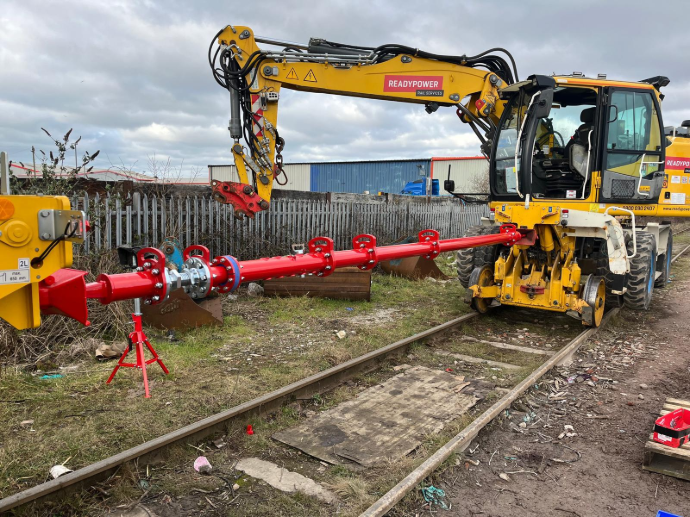
Allan J Hargreaves Plant Engineers (AJH) bespoke design-and-build service was recently asked to provide a recovery towbar with infinite adjustment between 3 m and 6 m. The towbar had to be manually handleable - no powered lifting equipment required - and, for compliance with RIS-1530-PLT, had to withstand 120 kN in both compression and tension.
Multisection solution
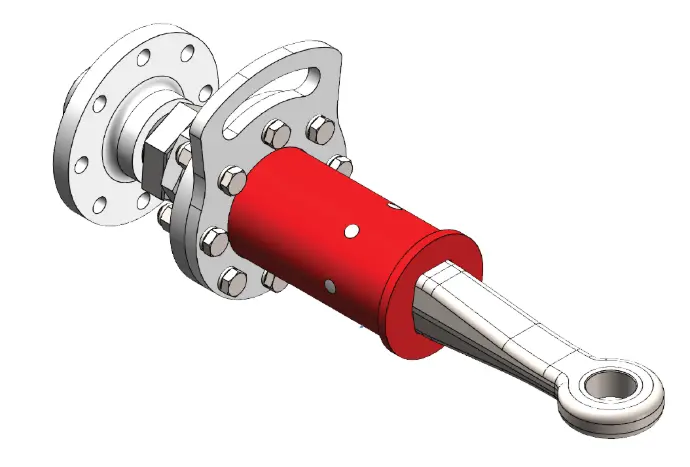
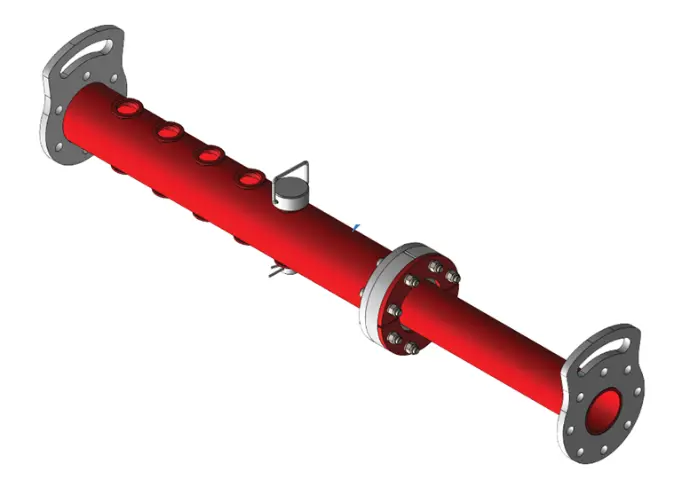
The solution was to provide a number of sections, connected together on-site by bolted flange interfaces. Rigid sections were provided in various lengths, and then two adjustable pieces allowed the final length to be set. A telescopic section, with a pinned locking mechanism, provided coarse adjustment, and a threaded section lent an infinitely variable fine adjustment.
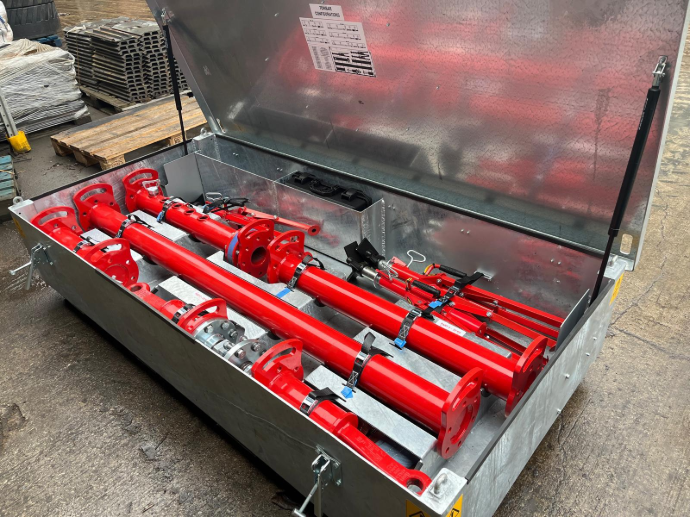
The maximum section weight was 35kg, and ergonomic lifting handles were provided on each end of the sections to allow an easy, two-person lift. Pipe stands were provided to support the towbar as it was built up, so the only manual handling required was lifting each part out of the storage box and onto a pipe stand. The dedicated storage box keeps all of the parts together, including spanners of the correct size for assembly, and a secondary retention as requested by the customer.
Proving the concept
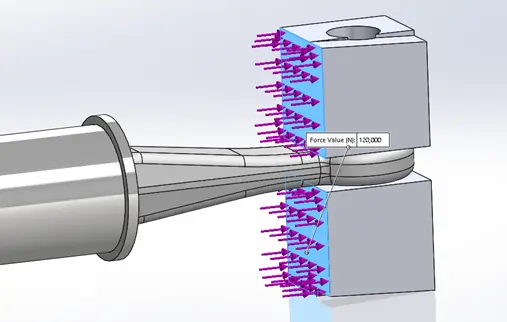
During the concept design, manual calculations were undertaken for tensile stress and buckling. These were then used to select appropriate tube sizes for manufacturing the parts. Throughout the design process, Finite Element Analysis was used to assess the assembly's strength, with iterative design improvements made to optimise both weight and strength. A component-level Failure Modes and Effects Analysis was undertaken to identify potentially dangerous failure modes. Wherever possible, these were eliminated or mitigated through design features when complete removal was not possible.
The risk of incorrect assembly of the towbar has been avoided by using different bolt patterns and by ensuring that any fixing not intended for on-site disassembly uses different tools from those supplied in the storage box. Once the towbar was completed, it was tested from both an operational and engineering perspective. The assembly procedure was undertaken to ensure manual handling safety and validate timings. The towbar was then subjected to proof tension and compression load tests, with, finally, shakedown testing carried out by towing and propelling a rail vehicle on AJH’s dedicated test track.