AJH Plant is founded.
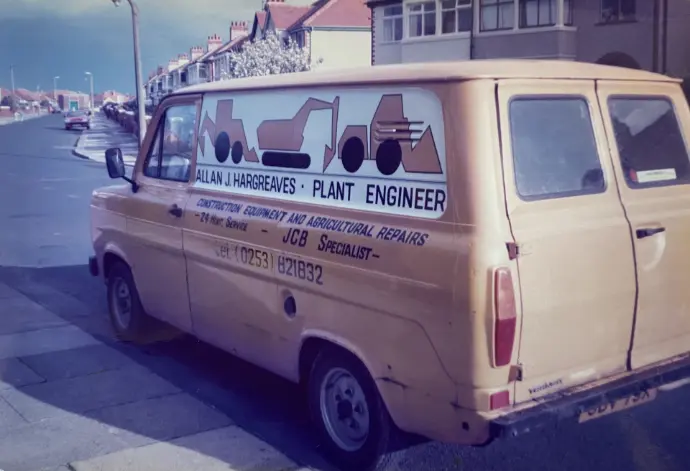
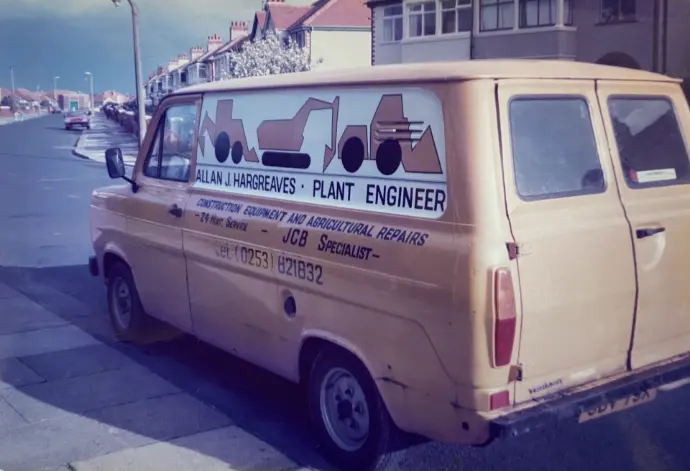
After returning to the UK, Allan establishes Allan J. Hargreaves (AJH) Plant Engineers in Thornton-Cleveleys, specialising in construction equipment and agricultural repairs with a nationwide 24-hour service.
First apprentice joins AJH.
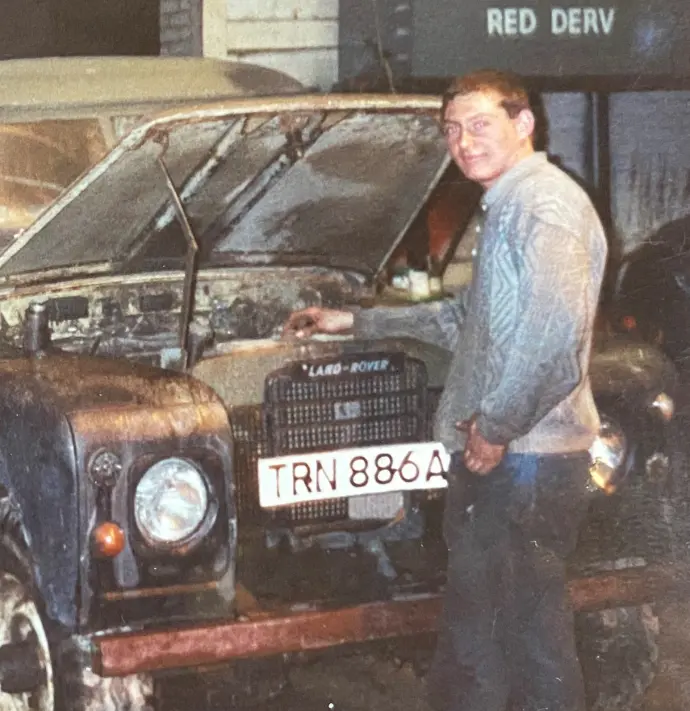
Stephen Dell becomes AJH's first apprentice, establishing a tradition of training and developing skilled engineers that continues to support the company's growth and success today.
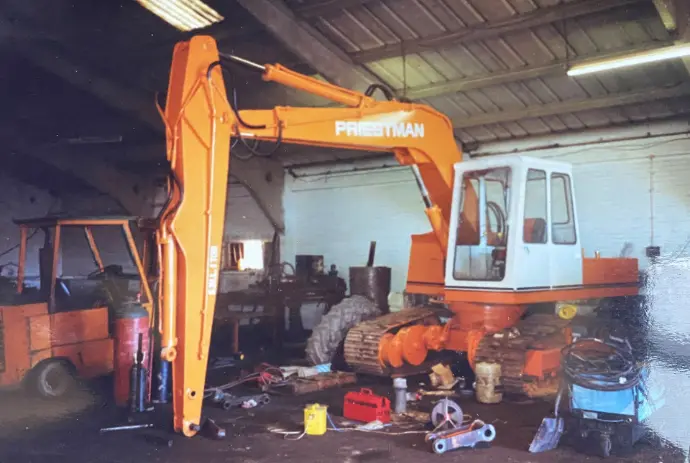
Field service to workshop-based operations.
As demand for its services continued to grow, AJH rented its first workshop, marking the company's transition from a mobile field-service business to a dedicated engineering facility. This important milestone provided the space needed to undertake larger repair, maintenance, and refurbishment projects, laying the foundations for future growth and expansion.
First workshop purchased at the current site.
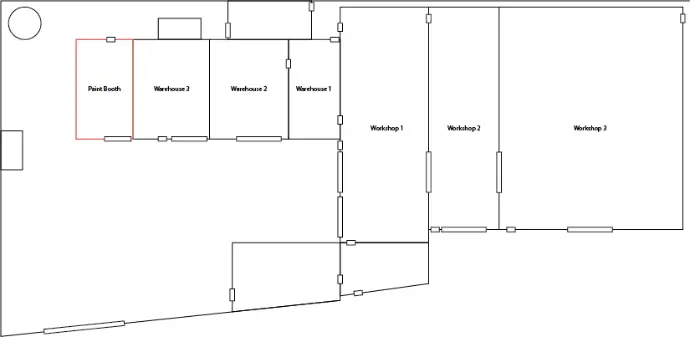
AJH takes a major step in its growth by purchasing its first workshop at what is now the company's long-standing Thornton-Cleveleys headquarters. The investment provided a permanent base for operations and created the foundation for future expansion, manufacturing capability, and continued business growth.
Business incorporation.
Allan J. Hargreaves Plant Engineers is formally incorporated, marking another milestone in the company's growth and development.
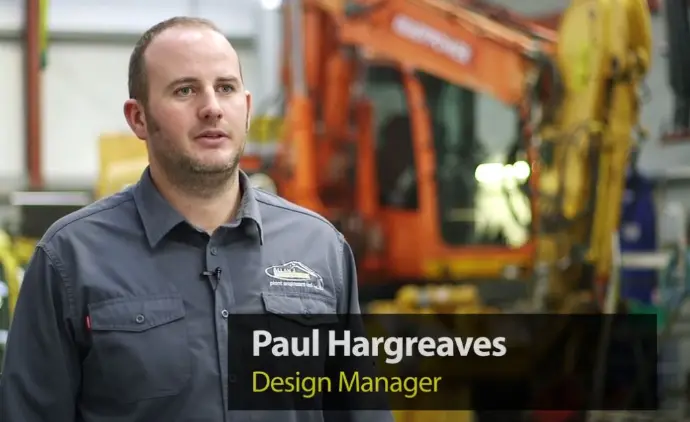
Paul Hargreaves joins AJH.
After a successful engineering career with BAE Systems, Paul joins the family business as Design Manager, bringing advanced technical expertise and driving innovation.
Industry-leading braking system developed.
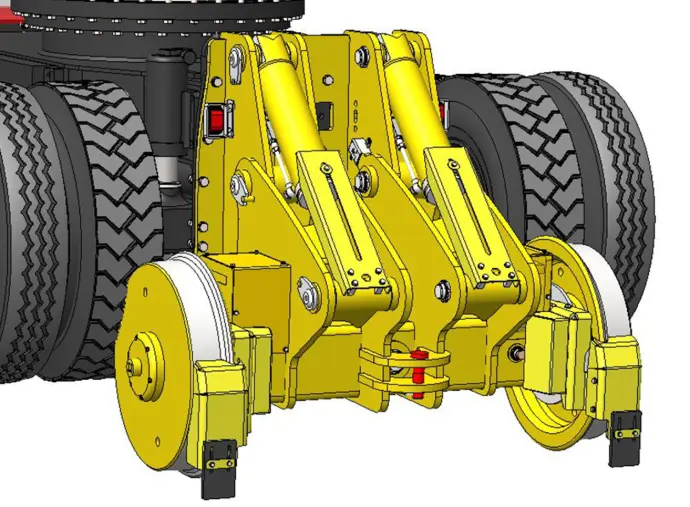
AJH designs a direct rail-wheel braking system for Type 9B machines. Following Network Rail's adoption of the technology as an industry standard, AJH completes over 400 machine conversions across the UK.
Major facility expansion.
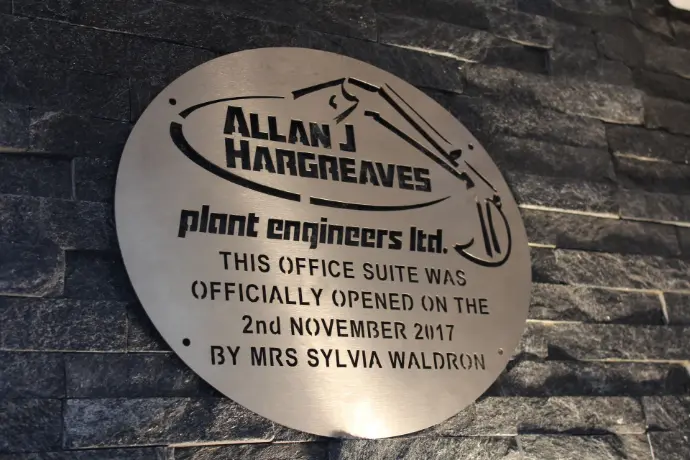
To support growing manufacturing demand, AJH opens two new workshops and a modern office suite, significantly increasing capacity.
First full rail conversion excavator.
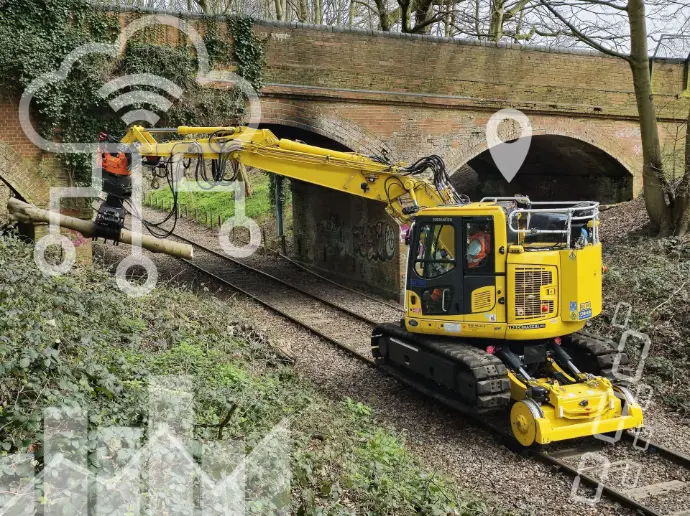
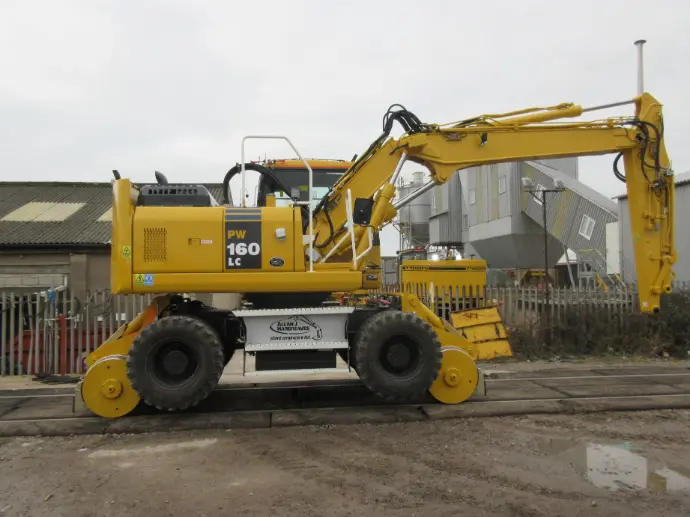
AJH completes its first fully converted road-rail excavator, laying the foundations for its future as a leading UK road-rail vehicle manufacturer.
Launch of the Rail Cyclone.
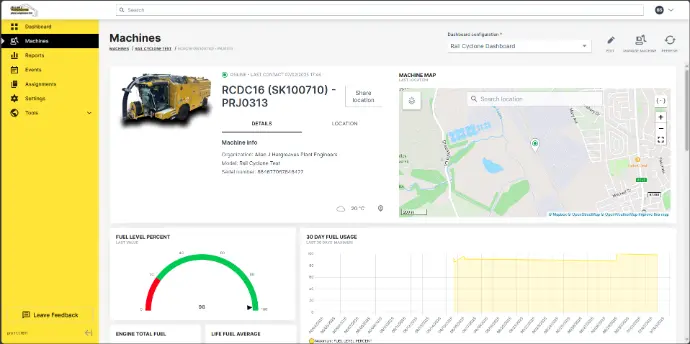
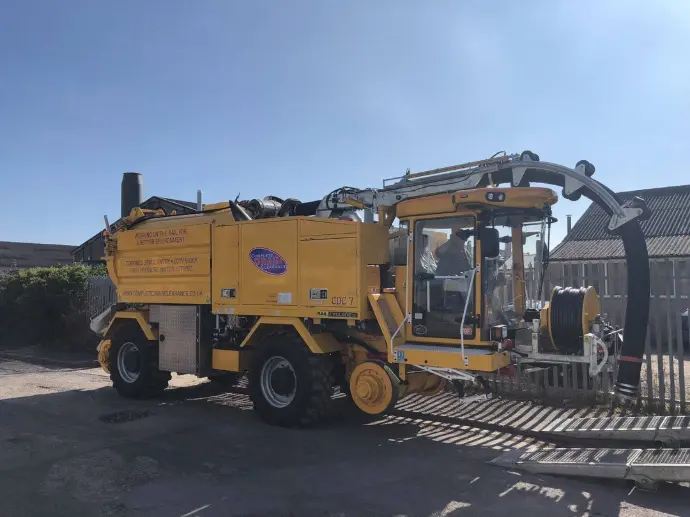
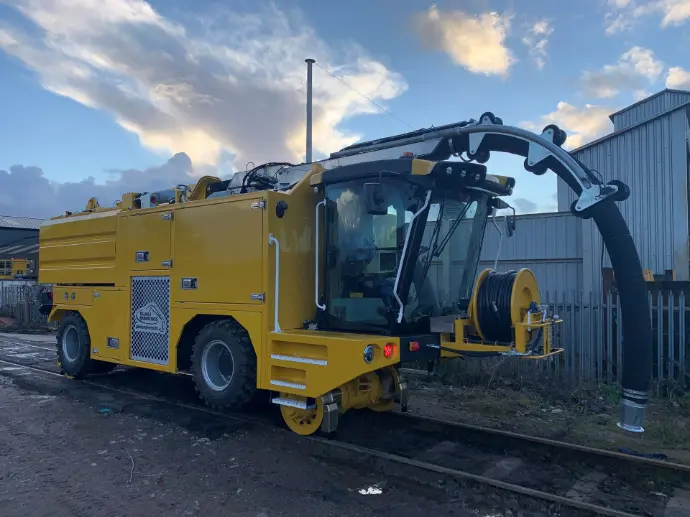
AJH designs and builds its first complete road-rail machine, the Rail Cyclone suction, jetting and drainage machine, showcasing the company's manufacturing capabilities
Further production growth.
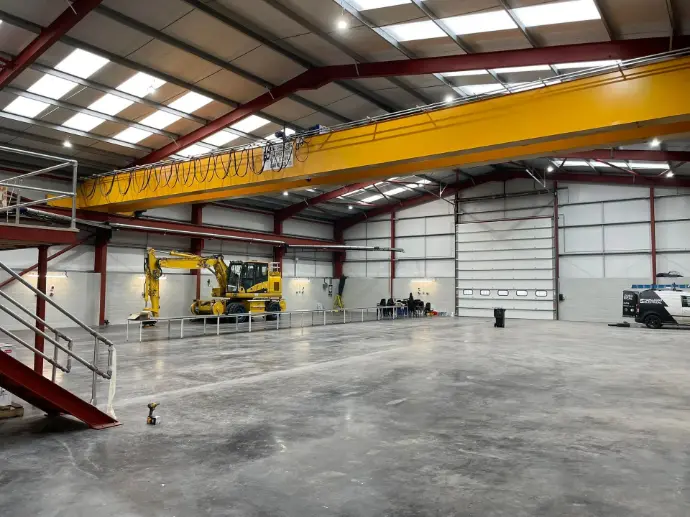
Development of the main production hall is completed, supporting AJH's expanding workforce and manufacturing operations.
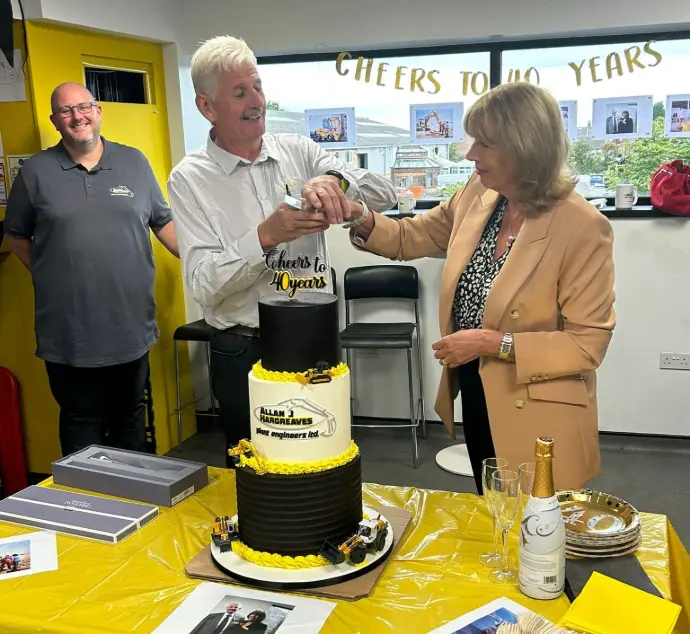
40 years in business.
AJH celebrates four decades of growth, evolving from a plant maintenance specialist into an industry-leading road-rail manufacturer.
Leadership transition.
Paul Hargreaves becomes Managing Director, taking responsibility for leading the next phase of innovation, growth and strategic development at AJH.
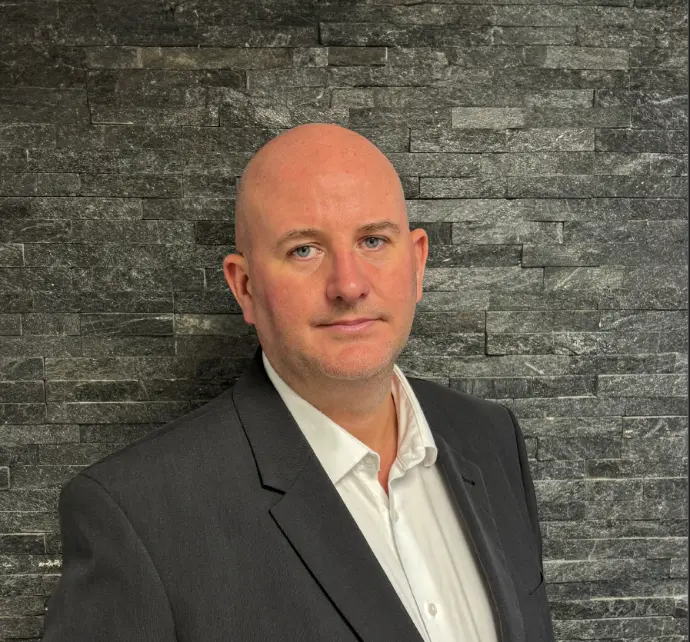
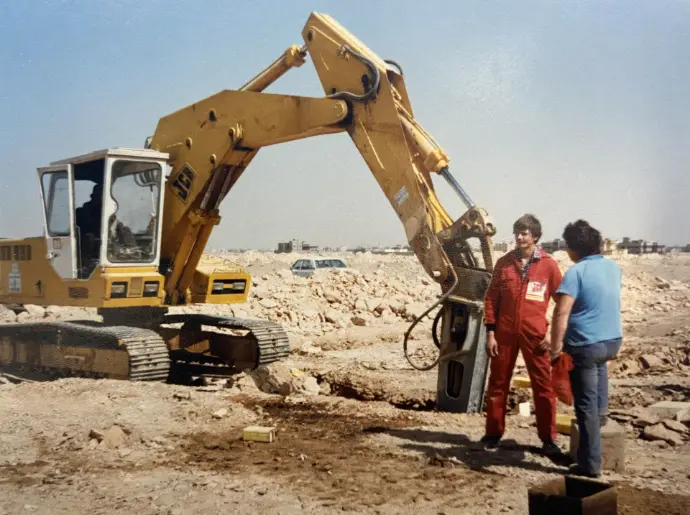
Born in 1955, Allan Hargreaves has made a career and business in the plant and rail sectors, with a tenure spanning over half a century. Allan has worked across multiple continents and built a thriving business through his vast experience, dedication and entrepreneurship, leaving a lasting impact on the rail construction industry. In his early years, Allan began working for Gunn JCB, where, as a plant engineer, he learned his trade. His time at Gunn’s helped him develop his understanding of machine and equipment maintenance, which he then expanded while working in Nigeria and Saudi Arabia before returning to the UK.
Upon moving back in 1983, Allan started his own company, Allan J. Hargreaves (AJH) Plant Engineers, specialising in construction equipment and agricultural repairs, which was later incorporated in 2005. Based in Thornton-Cleveleys, it provided 24-hour services around the UK. Applying his expertise in maintaining and repairing plant machinery, Allan began expanding his client base, building trust with his customers and allowing him to grow the business. In 1998, AJH diversified into rail plant by introducing Mecalac road/rail machines into the WA Developments fleet, providing service and support for all its plant and equipment.
Generation of technology
Shortly after establishing their business, Allan and Ros had two sons, Paul and Phillip, who took different career paths when completing their education. Paul Hargreaves chose a more technical career path with BAE Systems over a 10-year period, working as an aircraft engineer on the development of the Typhoon fighter jet. His success in his role led to his being tasked with managing a team responsible for converting, upgrading, and delivering aircraft to Saudi Arabia, where he deepened his knowledge across various engineering fields.
Wanting to apply his experience and knowledge, Paul left BAE and joined the family business in 2011 as Design Manager. One of his first developments in his new role was designing a direct rail-wheel braking system for type 9b machines, after Network Rail adopted it as an industry standard. AJH was awarded a contract by Network Rail to retrofit machines throughout the UK, resulting in more than 400 conversions over a four-year period.
Catalyst for innovation
The success of the early design projects enabled growth and accelerated R&D. AJH’s portfolio began to expand from individual machine modifications, upgrades, and refurbishments to complete rail conversions. Shortly afterwards, AJH joined forces with major OEMs as preferred partners for rail conversions in the UK. With the experience gained from designing and manufacturing full rail conversions, Paul’s next venture was to design and build AJH’s first road/rail machine. In 2018, AJH produced its first suction, jetting, and drainage machine, ‘Rail Cyclone’, the success of its release leading to continued development of the product. The Rail Cyclone 2 is considered a rail roader, as opposed to a road railer, with the complete machine designed and manufactured in-house and produced primarily for this specialised rail application. Readypower’s fleet currently sits with four of these machines.
With new ideas come new facilities, business expansion, and an increase in the portfolio, all of which require accommodating the growing manufacturing needs. This led to the construction of brand-new infrastructure, with two additional workshops and an office suite opening in 2017. Further development of the main production hall was also completed in 2022, and today the company employs over 70 staff with greatly expanded premises.
Business transition
The steady growth and development of the business, thanks to Paul’s influence and guidance, was rewarded with a promotion from Design Manager to Technical Director. In his new role, innovation was not only a product but also a company-wide focus, with operations evolving into leading facilities and progressive thinking at all levels. This cultural shift toward continuous improvement, combined with training, has empowered employees to contribute to and influence progress in design and manufacturing operations.
Since Paul’s arrival, AJH's transformation from a mechanically biased servicing and maintenance organisation to an industry-leading road/rail manufacturer, which celebrated 40 years in business in August, is evident. Allan and Ros’s dedication to building the business into what it is today, whilst evolving with the more technically driven changes led by Paul, is a testament to their commitment to being an industry-leading company.
With the last four decades dedicated to building their own company from nothing, it is time for both Allan and Ros to enjoy the fruits of their labour and spend time away from AJH. The decision has not come easily for them to let go of something that has taken up so much time and effort over the years, but whilst they will remain around AJH in the future, the time has come for Paul to step up as Managing Director to further drive the development and growth of the business.
Where is the company today?
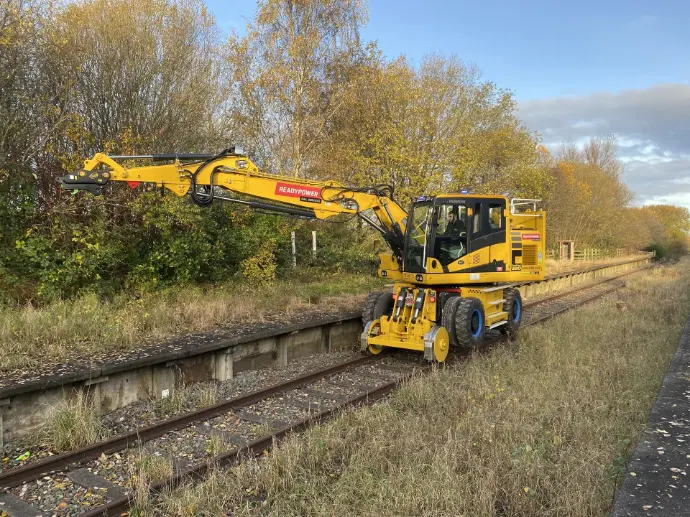
Over the years, AJH has developed strong links with major OEMs, enabling the development of innovative machinery and equipment to meet customers’ demands in an ever-evolving industry. A strong foundation in plant maintenance and servicing has formed the backbone of machine design and new product development, with the product life cycle at the forefront of optimising the operators' experience whilst also ensuring that maintenance can be carried out easily and effectively, with minimal downtime. AJH’s machine conversion portfolio now also includes machines for use in Ireland, consisting of broad gauge axle development and dual-gauge axles capable of interchanging between UK ‘standard gauge’ and Irish ‘broad gauge’ railway lines. Some of the latest additions to the portfolio are the Liebherr R920 Rail - a 32-tonne tracked heavy lift machine - and the Komatsu 320 TerraRailer - a 32-tonne wheeled machine with excellent lifting capabilities for its class.
What does the future hold?
AJH is constantly developing new ideas and solutions, and the need for the industry to begin moving towards zero emissions is clear. The company has been busy building the foundations needed to ensure this technology can be implemented effectively. While machines may eventually be fully electrically powered and actuated, for the foreseeable future, they will be electrically powered or use an alternative fuel source, such as hydrogen, and hydraulically actuated, as they are currently diesel-powered and hydraulically actuated. The transition to electrically powered hydraulic machinery requires power supplies with sufficient energy density and redesigned hydraulic systems to accommodate new operating principles.
In terms of power supply, AJH has been logging power consumption data from in-service machines to determine average and peak power demands, with the aim of gaining a better understanding of duty cycles in service. The absence of electric charging points at many OTP stabling locations is the single biggest challenge to decarbonising this sector. As a result, AJH has been developing a hydrogen fuel cell solution to complement the battery power supply. The batteries are sized to handle peak power demands, with an onboard fuel cell that meets average power consumption and fully charges them for the subsequent shift. Hydrogen can be replenished with small cylinders that can be manually handled or with larger hydrogen bottles stored on-site, enabling batteries to be charged repeatedly in remote locations using a zero-emission fuel source.
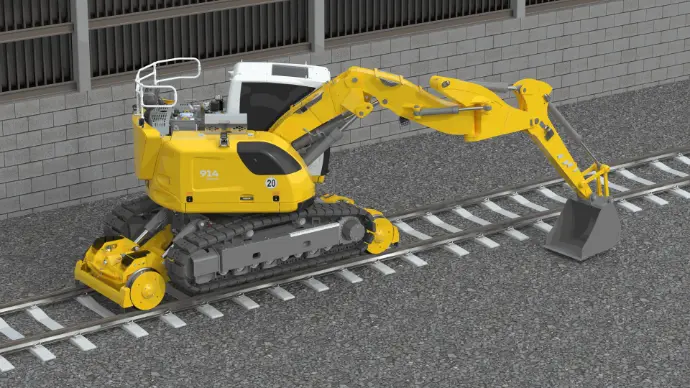
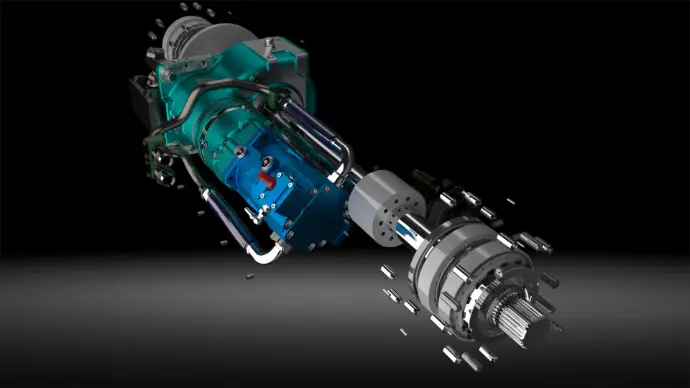
The power density of current battery technology makes it difficult to power larger excavators, particularly on rail, where available space after conversion to rail is already at a premium. However, the rail industry should be able to exploit the fact that rail machines require a much lower duty cycle and power demand than the earth-moving machines they are adapted from. The technology to convert OTP to zero emissions is available now and should be considered a viable option in advance of off-the-shelf products from major OEMs, managing costs by extending the life of existing diesel assets through conversion.
Hydraulic efficiency is an integral part of AJH’s machinery design. This knowledge is essential when designing with lower-density power sources. Further improving efficiency, hydraulic systems will move away from continuously powered pumps toward on-demand systems that deliver only the oil required and minimise losses. This, however, requires a different set of operating principles and associated hydraulic design, which AJH has the expertise to implement effectively. Whether it is smaller MEWPs or larger excavators, AJH is developing solutions specifically designed for the rail infrastructure and will be at the forefront of moving the rail plant industry towards zero emissions. This is not going to happen overnight but AJH invites customers to engage with them, whether it is a particular contract requirement they are trying to meet, wanting a better environment for staff working in enclosed locations such as tunnels, or the worksite is in close proximity to a residential area and noise is a problem.