Interview with Paul Hargreaves
Sam Sherwood-Hale spoke to Paul Hargreaves about growing a Lancashire
engineering firm from eight to 80 employees, navigating rapid changes in rail
technology, and why the industry faces a period of managed asset decline
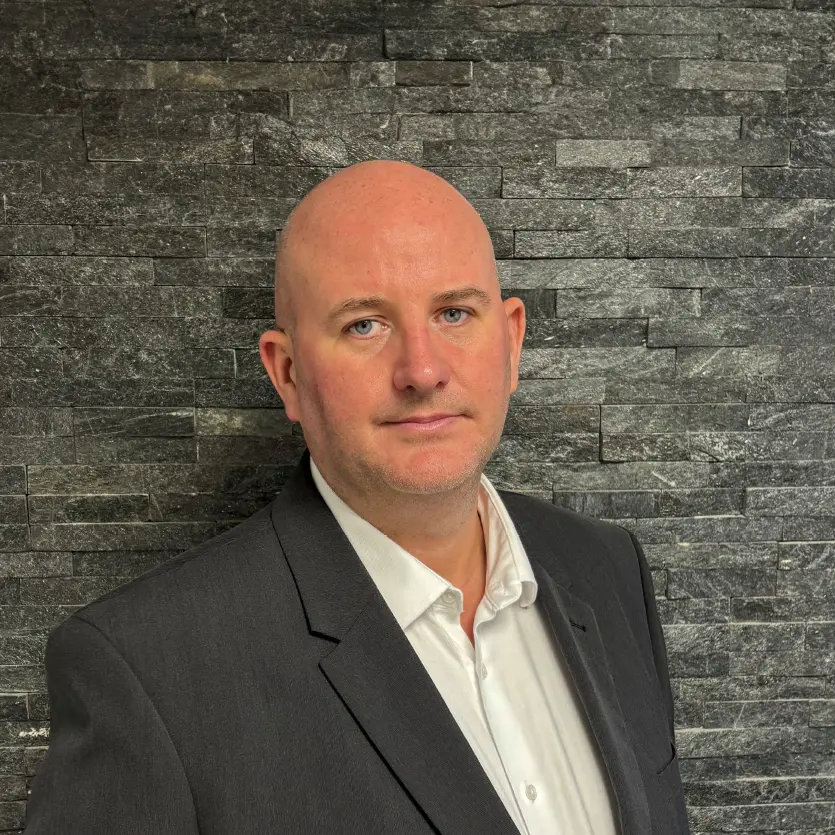
Paul Hargreaves, Managing Director
Paul Hargreaves is Managing Director of Allan J Hargreaves Plant Engineers. He spent a decade in aerospace engineering, including work on Eurofighter Typhoon development and Saudi aircraft deliveries, before joining the family business in 2011. He completed a management buy-out 2 years ago.
Let's start with your background. Can you tell me about your journey before joining the family business?
I actually went and did my own thing after leaving college. The family business was set up 42 years ago, but I wanted to pursue my own path first. I did two years at college and then an apprenticeship at BAE Systems, before going on to work on Eurofighter Typhoon development, testing all the new weapon systems and hardware on development aircraft. Eventually, I ended up running a team delivering jets to Saudi Arabia for the new Typhoon sales. After taking an aircraft over to Saudi for some trials around 2011, the aerospace industry was rapidly changing, I took the decision to leave aerospace and join the family business following ten years of very interesting work, it was a springboard for me and gave me a very different perspective, opposed to joining the business earlier in my career.
In the back of your mind, were you always aware that you could move into the family business?
It was always in the back of my mind, because from a very young age I used to go out in a van with my dad at weekends as a kid and help him. I was always interested in mechanics and engineering. So yes, it was always there as an option.
What was the company like when you joined?
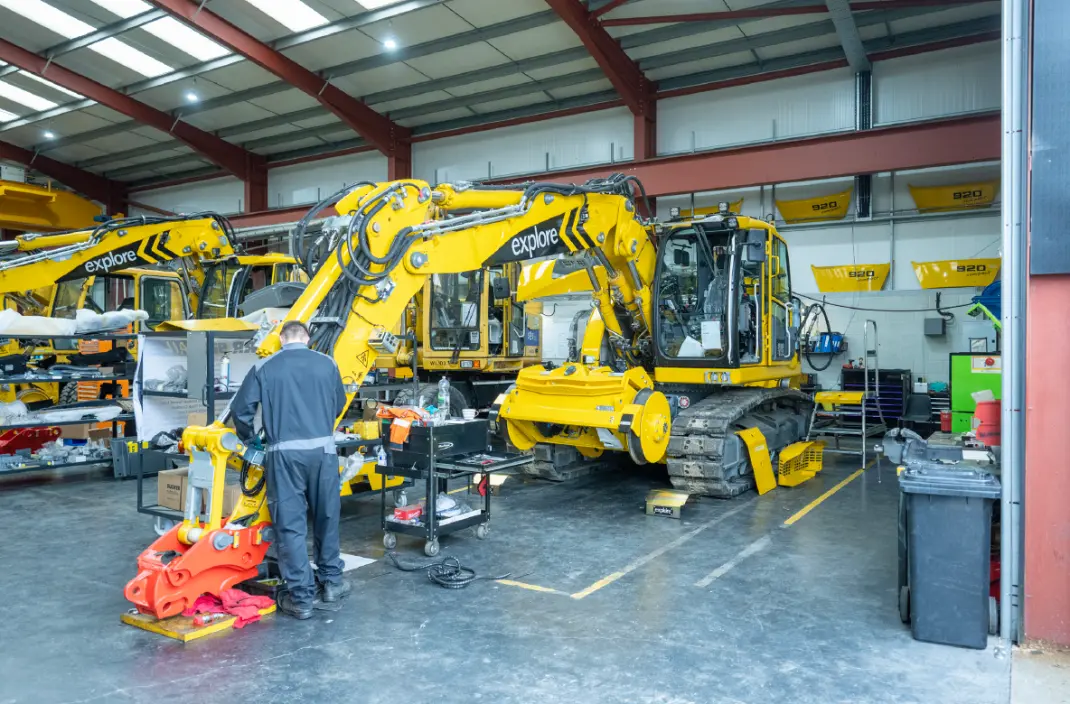
We were quite small at the time, only about eight of us. We spent the next 13 years building the business, taking it from mainly repairs, you know, repairing customers' machines, to upgrading and refurbishing machines. In the last seven years, we've been manufacturing machines as well. There's been quite an evolution. The business has completely transformed from a field service organisation to production and refurbishment. Most of our work is now on site.
You developed your first direct rail wheel braking system in 2012. What problem were customers facing that nobody else was solving?
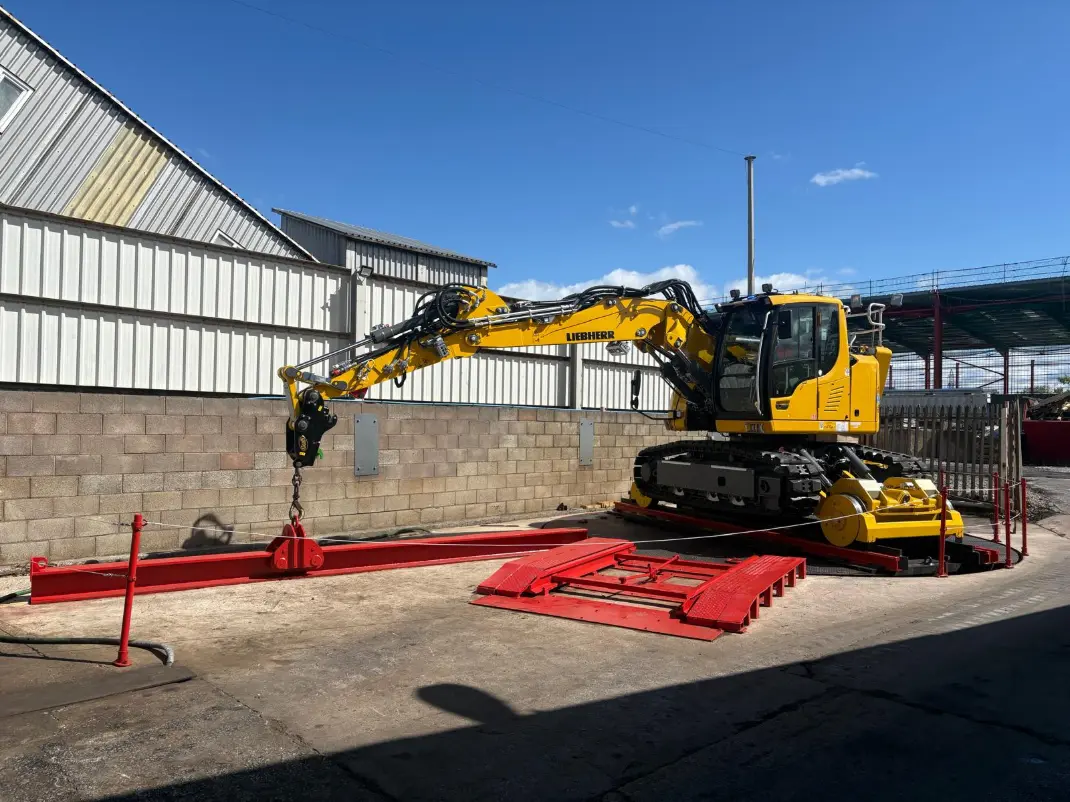
This was brought about by a change in rail standards. Network Rail mandated direct rail wheel braking to manage the risk of runaways following a number of accidents and near misses. At this time, the RIS-1530-PLT standard was evolving rapidly, being updated every 12 to 24 months. This was a great time for innovation, from brakes to movement limiters. It was actually a Network Rail funded project because they had to respond to the ORR to manage runaway risk. As a result we developed a failsafe braking system and successfully retrofitted approx. 400 machines directly for Network Rail.
What gave you the confidence to enter the market with these rapidly changing standards?
The aerospace experience was a great foundation for coming into this industry. It was quite easy to transition because of the type of work I'd been doing. We were delivering aircraft to Saudi Arabia, taking them off the UK production line and upgrading or modifying them to Saudi spec. It's very similar to what we're doing now: upgrading, refurbishing machines, modifying them to the right standard. One of them flies and one of them runs on tracks, but the quality aspects of aerospace standards have really driven me. Obviously, there's nowhere to pull over in the sky. You've got to get it right.
You now employ 80 people manufacturing highly specialised equipment. What's your biggest operational challenge right now?
Keeping up with the rapid change in technology. New machine lifecycles get shorter and shorter as new engine technologies and control systems are released. A machine from an OEM might only be released for four or five years at most now, and then it will change spec again. Fifteen years ago, there might have been 10 years between models. You're having to spend a lot more time on engineering, revalidating or redesigning the machines
Does that actually help your business in a way, since more companies need your services with these shorter life cycles?
I suppose it is driving people to need newer equipment because of the newer emissions standards. Although in rail we're in a bit of a pigeon hole where no one's really looking at emissions yet. We're a little bit shielded from it at the moment. But yes, people are looking for new and more reliable equipment. The crucial part is reliability, a key driver and focus for Network Rail, we have a clear focus to design and manufacture our machines to perform consistently.
Your machines can work under live overhead lines. Most can't. What engineering hurdles did you have to overcome for that capability?
We install RCI systems, rated capacity indicators. With a PLd system, they can be approved for use under OLE, along with some other specific requirements. We specialise in the integration aspect and the approvals, systems such as GKD and InTeEx. We've been integrating these systems since 2012. They're usually third-party systems
that keep the machine within specified limits so they can't strike an overhead power line or a machine on an adjacent line.
You just expanded your site by 900 square metres. What specific bottleneck was holding back your growth?
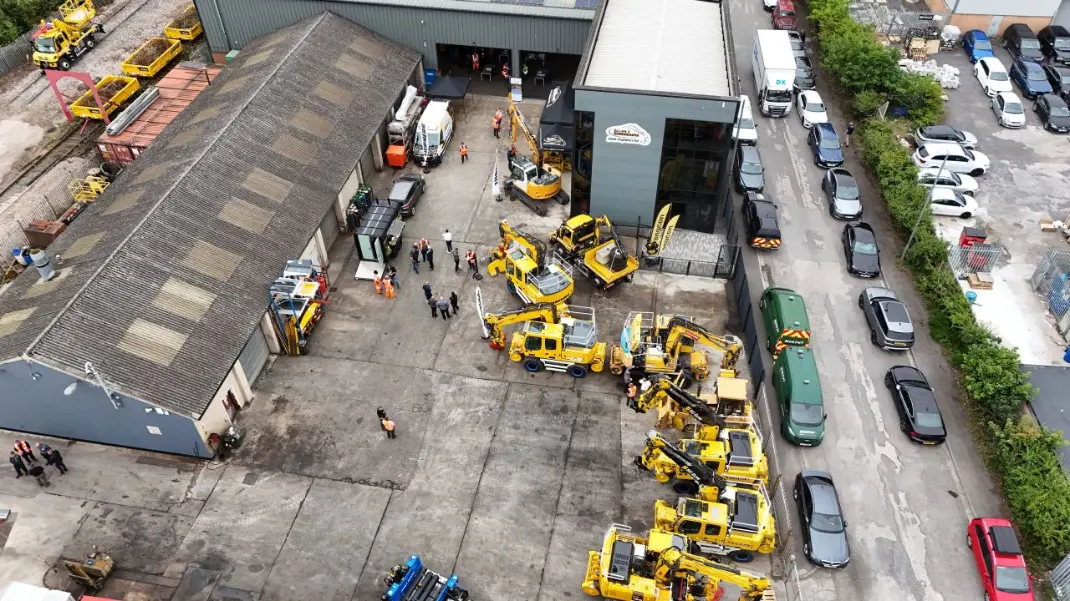
Space has been the biggest bottleneck, particularly as we've moved to more focus on manufacturing. We've just grown organically, kept adding units onto our site. If you were to start again with an endless pit of money, you could design the perfect site, but growing like we have has probably not given us the best layout. We've bought another plot of land adjacent to our site and we're going to reconfigure to have our logistics and all our parts properly organized. Even getting machines around site is hard because of the forklifts and stores. The new space will allow us to create flow around the business and keep all the stores and logistics elements away from the daily operations.
What was the point where you realized you needed to expand in this way?
It crept up on us, to be honest. We hadn't really noticed it until we took a step back and looked at all the wasted time. People trying to move machines, having to move a couple of machines out of the way. It was about twelve months ago that we identified we needed to do something fairly drastic.
Why expand around your current location rather than move to a whole new site?
We have access to a rail line at the back of our current site, so moving to another site is not really an option. We own all the land, and we didn't want another unit that wasn't adjoining. Purchasing additional premises adjoining the current property was the key move.
Network Rail has notoriously strict certification requirements. How do you navigate that approval process?
We have an experienced engineering team who navigate the standards daily. They evidence all the engineering decisions we make, which allows for a smoother and more transparent evidence-based approvals process.
In terms of expanding from eight to 80 employees, how involved were you in hiring?
We take on a lot of apprentices, about three every year. So we have somewhere between nine and twelve apprentices at any one time, and we've done that every year. A lot of our employees have come through that route. It's almost impossible to find experienced engineers that do what we do. We're in the northwest of England,
and if you draw a circle around Fylde near Blackpool, half of it's in the sea! So we try and grow our own. We're strong in bringing people through the business and trying to develop them. Although we have had to make some strategic hires to get specific skills we needed.
When apprentices ask about career opportunities, would you recommend they stay in the industry or do what you
did and go elsewhere and bring those skills back?
If you're passionate about what you do, that's the main thing. It's not about moving for moving's sake. I would have stayed at aerospace if we didn't have the family business. An apprenticeship is a great way to start. I did that, and here I am now.
What's your experience with the quality of apprentices today compared to when you started out?
These are coming from school and most of them don't have any clue what they want to do when they leave. The candidates that are better for apprenticeship tend to be the ones that have done a year of college or a year of something else after school. There's a stark difference between 16-year-olds leaving school and 17 or 18-year-olds. Even in one or two years, there's a great leap in maturity and life experience. Don't get me wrong, we have taken on some 16-year-olds who have been really good, but generally speaking, they don't know what they want to do at 16. I did two years at college before starting my apprenticeship at BAE, and I think that extra time really helped.
You're adapting Komatsu excavators for railway use. What's the most complex modification you've had to figure out?
We actually do Liebherr and Komatsu excavators. We're building and developing more Liebherr machines than Komatsu at the moment. For the Komatsu’s, we stretched the cab on those machines and put that through ROPS testing, which is rollover protection structure testing. That's quite a major achievement. We completely rebuilt the cab into a new cab and took it to an external test house for the rollover testing.
But if you want to talk about the biggest challenge, we build a jet vac machine for railway called the Rail Cyclone. The whole machine is designed and built in-house at our works. It's a suction unit which clears out all the drains from the catch pits at the side of the railway and does high-pressure water jetting. The first one we did was converting a customer's crop sprayer into a jet vac machine. After that, we thought we could do this better ourselves. The customer let us design and manufacture the complete machine from the chassis up rather than convert an existing unit. We still build those to this day. That first one was seven years ago. That's probably the biggest technical achievement.
Your first rail conversion was in 2018, and now you have the Rail Raider Mk2 and Rail Rascal. What's the next machine you're developing?
We've just passed the 100 machine mark! Just over seven years ago, we built the Komatsu Rail Raider, our very first machine. The second machine, approved a couple of weeks after that, was the first Rail Cyclone, which was the crop sprayer version. Currently in development, we have the Liebherr R914 Rail, the baby brother to the R920 Rail, plus some additional machines we can't yet disclose.
Your father built this from a single van to an 80-person operation. What's the biggest change you're making as the new owner?
I worked alongside my parents for 13 years before taking over. There has been a lot of evolution over those years to bring us to where we are now. It's not about making any great changes but continuing to do what we do best and develop along with the industry.
Major infrastructure projects can take years. How do you maintain cash flow with such long development cycles?
We try to ensure we maintain a diverse workbank and don’t have all our eggs in one basket so to speak, this allows us to pivot more easily when demands arise or drop off.
You offer both GKD and InTeEx safety systems. How do you decide which technology to recommend to different customers?
These safety systems have specifications to meet regarding key functionality, at the end of the day they both meet the required standards for the rail industry. We aim to guide customers with their decision however the decision can be driven by the users organisational restraints such as training and competence of both the operators and the engineers.
The rail industry has gone through decades of privatisation, renationalisation debates, and now faces massive electrification and digitalisation programmes. As someone who's been designing rail equipment since 2011, how have these shifting political and technological currents affected your business strategy, and where do you see
the biggest opportunities emerging?
A big opportunity to change lies with privatisation of the TOC’s when they are brought into great British Railways. This could allow for greater collaboration on track maintenance activities optimising maintenance windows to maximise the value, historically only short maintenance windows have been available with the majority of a work on a Saturday night which is costly and inefficient.
The government has committed to massive rail infrastructure spending through HS2, Northern Powerhouse Rail, and electrification programmes. How have overlapping economic and political cycles shaped your approach to growth, and what lessons have you learned about timing major investments?
We tend not to focus on the big projects, announcements for major projects can take years to materialise and change multiple times even before there are boots on the ground. We prefer to focus on reinvestment and organic growth rather than rapid growth for a big project, this consistent approach allows the team to evolve in a secure
environment, which is why as a business we have achieved consistent growth over our 42 years in business.
It is quite concerning that we are currently in a period of managed asset decline on the railway, budgets are being squeezed and the infrastructure managers simply cannot do the work they need to do with the budgets they have, mainly due to inflationary pressures. This decline needs to be reversed at some point with greater investment and a clear strategy with a longer view than the current five year control period funding settlements offer.